Jason Sorokin
Web Development 9


Interview Questions (Ms Dulay)
-
What are the core concepts or skills taught in this subject that are most valuable?
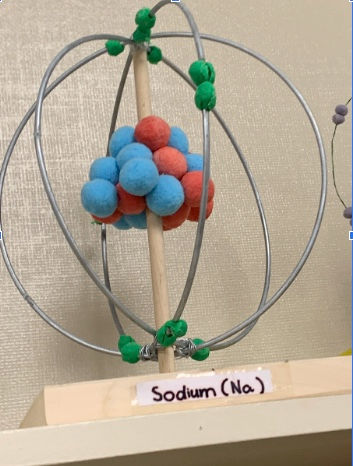
(1:58) I haven't taught Grade 10, or I'm not teaching Grade 10. And I haven't taught any senior chemistry because I'm a senior biology teacher. But I would say for Grade 8 and 9 chemistry, one big skill is being able to use models to represent things, because a big topic is atoms, and then in Grade 9, compounds. So Bohr models, for example, or other types of models to show the parts and how they can combine or separate is one big skill. And then another one is the chemistry unit, being able to identify different types of matter, so elements versus compounds, and how those are different and how we see those in the world around us. So even if we don't realize it, we're looking at a lot of things that are compounds, whether they're homogeneous mixtures, heterogeneous mixtures like the air around us even as an example, and how those terms are actually already things we're experiencing in real life.
-
How does this subject relate to real world situations?
(3:28) Oh, I think it relates a lot. And are we specifically talking about chemistry still? I would say that it relates a lot, especially from what we're learning in Grade 8 and 9 chemistry, because we're talking about atoms. And atoms, as we hopefully remember, are the smallest unit of matter, so they make up everything in the world. And then atoms are elements that make up compounds, mixtures. So everything we're seeing and how things interact with each other, like reactions, those are all things based from chemistry. And then I think it's cool because we can notice things like, for example, how a concrete bridge actually gets a little bit bigger in the summer, and it actually gets a little bit smaller in the winter when it's cold, because particles act differently at different temperatures.
So lots of real-world connections.
-
What project will students be doing and their purpose?
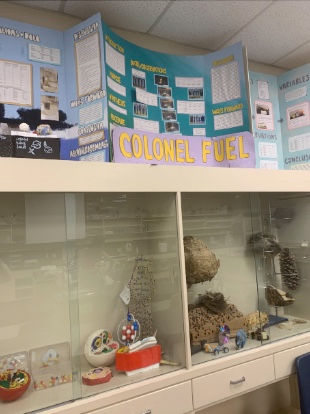
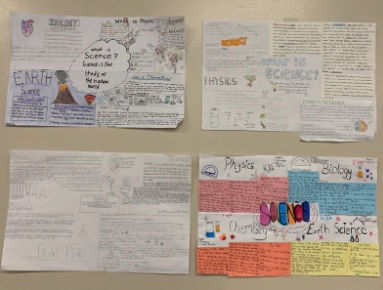
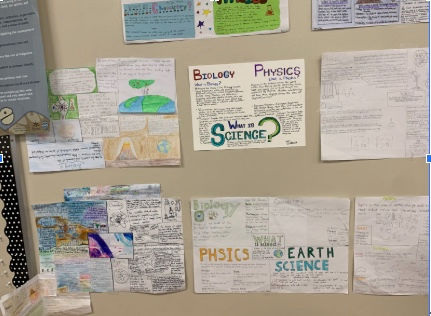
(4:44) One project I had my students do last year in the chemistry unit was researching about one element in particular. So they had to learn and make a project, a cube, on the history of that element, all the properties of that element.
So it's density, color, all those kinds of things, how we use that element, and also Bohr models of that element.
-
How could this subject benefit students in the future? (University)
(5:21) I think there's a lot of jobs that use science, so one big one is the medical field. And then also if you want to do research or study science, or if you want to be a science teacher, yes, that would work.
And then for university, I know a lot of them look for science courses up to grade 11 at least, even if you're not doing a science program. But I think that the skills that we do in science can apply to different parts of the world anyways, like how we ask questions about things and then find a good system, the scientific method we use, to find a way to get an answer to that question, or even making reports in an organized way. All skills you could use in any subject, even if it's not science
.
-
What concepts in chemistry do most students find the most challenging, and what strategies do you use to help them understand?
(6:19) I would say in Science 9, one that's really challenging is we have to learn how to name different types of compounds. And some students find it really hard to differentiate between different types of compounds. So what I found is helpful is if I make a table, like an organizer, and they have to first, before they try to name it, they have to take a step back and figure out what kind of compound they're looking at. So kind of, even though they should be doing that step, actually writing it on the paper, that they have to do that step before they can find the final answer.
-
What is your teaching style like?
(7:29) Okay, I think that I try my best to make interesting examples to help the students connect to what we're learning in the classroom, because we can't always see how these small things we're learning at school actually connect to our real world. So I try to make interesting connections with things that students might already know or have experienced before. And then I think in terms of homework, I wouldn't say I give a lot of homework, but homework, I do give homework because it's really good practice. And I think sometimes students don't realize that they need to do a lot of practice to make sure that they are prepared, and they actually know the material and the skills.
-
What part of chemistry do students like?
(8:24) I think they like the labs in chemistry, because they get to mix compounds.
And usually in chemistry, we have to wear the lab coats and the goggles. So I think it's fun for the students to get hands-on experience with the chemicals. And then sometimes there are chemical changes or physical changes that they can actually see. I think that's fun for them.
-
How many students are in a class?
(8:53) On average, about high 20s.
-
What safety protocols do you need to follow for chemistry?
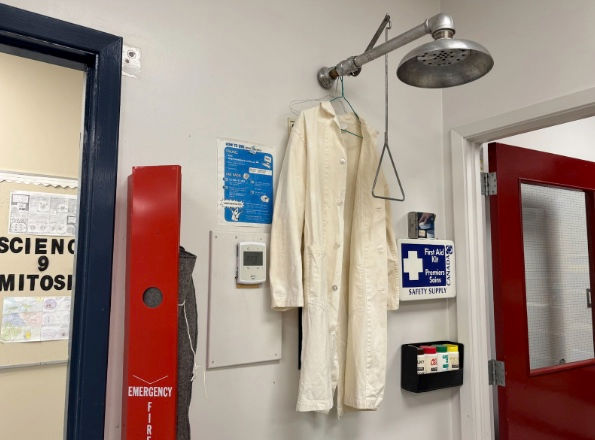
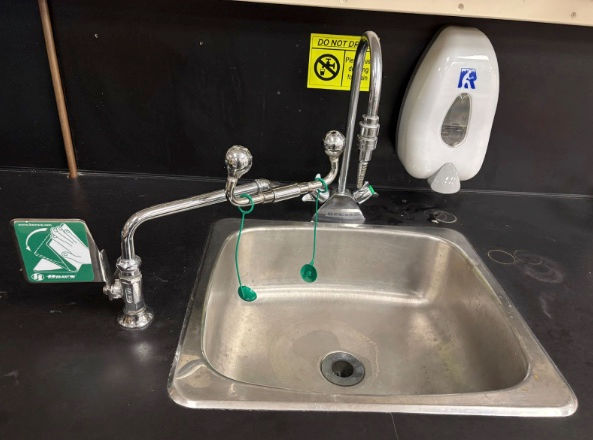
(9:08) We need to wear, in the lab, if we're working with chemicals that could be harmful, or even if they could stain our clothes or get in our eye, we wear a lab coat buttoned up. We wear goggles. If you have hair longer than your shoulders, you need to tie it back. You need to be wearing full-length pants, because the lab coat will cover your arms. And you need to be wearing closed-toe shoes.
-
What is a common misconception of chemistry from students?
(9:42) That we're going to be doing explosions and big chemical reactions. And we're not.
Interview Questions (Ms Yun)
-
What are the core concepts or skills taught in this subject that are most valuable?
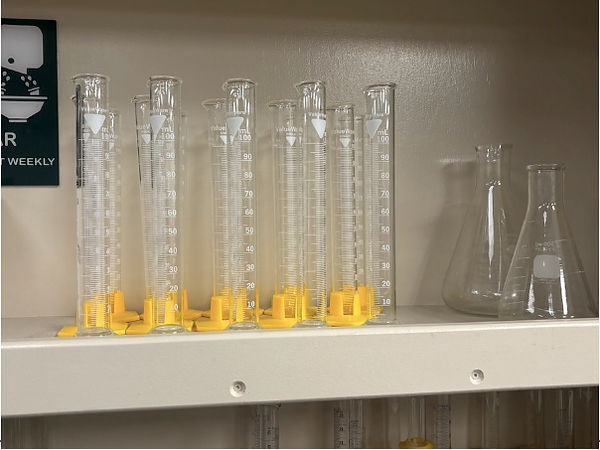
(0:07) Core concepts or skills taught in chemistry? I would say… some skills that are important in chemistry are lab skills. So working with different chemicals and using different lab procedures such as using like compounds and elements and using all the equipment that's in the lab, whether that's scales or chromatography or things like this.
Just picking up different skills in the lab. Concepts that are important to grasp I would say is just understanding that everything is made out of chemicals and then when you look around you in your world understanding how different chemicals come together to form all the things that we have in the world.
-
How does this subject relate to real world situations?
(1:02) So going back to my last point, I would say that chemistry is involved in everything. Everything is made out of the elements that are already existing in the world. So with that chemistry can be part of it. Basically everything, whether that is in engineering and talking about the materials of the wood that's being used or it could be also biochemistry is very important. So understanding how chemicals are moving inside of your body and that will help us understand like medicine and things like this. Chemistry is also important for making new innovations, making new technology, making new medicine and things like this that are important in our world.
-
What project will students be doing and their purpose?
(1:59) Well, lots of labs. So I teach junior science, so I don't teach senior chemistry, but I teach grade 8 and grade 9 and there are lots of beginner labs that lots of the students will be doing. For example, we're doing the chemistry unit in grade 8 and we're doing like diffusion labs, density labs and calculating density and understanding matter. Projects also include like understanding the history of different elements and compounds. We did the history of an atom. So understanding atomic theory and how we understand the atom to look like now compared to what we did a long time ago.
-
How could this subject benefit students in the future? (University)
(2:45) Well, because of the real-world examples.
Also, we deal with chemicals all the time including like cleaning solutions or chemicals. Understanding all of these things are important to understand how to use them.
-
What concepts in chemistry do most students find the most challenging, and what strategies do you use to help them understand?
-
(3:08) I think because elements are very very small. I think people don't understand like building models and a lot of the things that we do in chemistry are building models like when we are making drawing board diagrams and we're making Lewis diagrams and things like this. And then also naming. I think sometimes we students will have difficulty putting all these concepts together, and how do they relate to each other?
-
What is your teaching style like?
(3:45) Hard question. I think I like doing a lot of inquiry. I ask a lot of questions in my class and have students try to come up with answers on their own. And then I like doing some demonstrations. I like showing videos. I like having a variety of different things in order for students to understand things in different ways.
-
What part of chemistry do students like?
(4:20) I think students like labs. Fun stuff like blowing things up or like we did a I did a demo on like fire and the different colors. I think things that are, yeah, you don't see naturally in everyday life. Yeah.
-
How many students are in a class?
It varies from 20 to 30 kids.
-
What safety protocols do you need to follow for chemistry?
(4:48) Safety, lots of safety. Everyone does a safety unit at the beginning. You have to make sure that you are wearing your PPE or personal protective equipment, your lab coat, your goggles, clothes, those shoes, hair tied up. Depending on what you are working with, you might have to use gloves. And also understanding how to put away, put out a fire. If you're working with fire, how to use the fire extinguisher, fire blanket, sand bucket, all of these things are important.
-
What is a common misconception of chemistry from students?
(5:32) I think that chemistry is accessible to everyone. I think anyone can take interest in chemistry. I think a lot of times when we think of chemistry or we think of the sciences in general, we might think it's very technical, lots of memorization, lots of practice questions, kind of like math. But I'd say that there are lots of ways that we can enjoy chemistry, even if it's if you enjoy doing the labs.
Student interview
Frank Xu Gr 10
1.What was your first impression of chemistry?
I find chemistry very interesting and how the characteristics of atoms work
2. What's the coolest experiment you've done so far?
We explored how hydrochloric acid affects the metal zinc
3.What's one thing in chemistry that you find tricky or confusing?
balancing equations..
4.How has studying chemistry changed the way you see things in your daily life?
Now I understand what everything is made of and what some experiments do and make.
5.What's one piece of advice you'd give to a student who is about to start chemistry?
Don’t be stuck on one question when you’re doing a quiz..
Aliza Khan Gr10
1.What was your first impression of chemistry?
its very complicated once you indulge into the course
2.What's the coolest experiment you've done so far?
making volcanoes with baking soda and vinegar to demonstrate acid base reactions
3.What's one thing in chemistry that you find tricky or confusing?
balancing equations
4..How has studying chemistry changed the way you see things in your daily life?
it changed the way that i believe everything works
5.What's one piece of advice you'd give to a student who is about to start chemistry?
pay VERY close attention towards class discussions
Brianna Zhang: Gr 9
1.What was your first impression of chemistry?
I thought it was about learning about elements and doing experiments to make things explode
2.What's the coolest experiment you've done so far?
Elephant Toothpaste Experiment by mixing different chemicals and their reactions
3.What's one thing in chemistry that you find tricky or confusing?
One thing I find tricky is the measurements and how we’re supposed to do lab procedures.
4.How has studying chemistry changed the way you see things in your daily life?
Chemistry changed the way I see development in the things around me and all the things that react to each other.
5.What's one piece of advice you'd give to a student who is about to start chemistry?
I’d say read lab procedures more than once and if you still don’t get it ask someone you understand before the experiment
Research
Introduction
Chemistry's main aspects are: Atoms, and how they function, Properties of Matter: the characteristics of atoms, and chemical reactions / compositions. Chemistry is also connected with other forms of science like physics and biology. .
sources:
Chemistry deals with properties, composition, and structure of substances. Chemistry discusses the use of natural substances and the creation of artificial ones. Things we do daily are all chemical processes that date from the beginnings of civilization.
https://www.britannica.com/science/chemistry/Analytical-chemistry
-
Chemistry Subjects : Science 8/9/10, Science Chemistry 11 / 12 and Advanced Placement Chemistry 12
Science 8: This course includes fun lab activities, inquiry projects and collaborative projects and class work. This course also influences a positive attitude to science and understanding the importance of it in the real world. The big topics in chemistry include kinetic molecular theory and Atomic Theory.
Science 9: This course also projects the values of Science 8. During the year, students will investigate in Chemistry the Electron arrangement of atoms impacts their chemical nature and the Formation of Compounds. This course involves lab experiments, demonstrations and other activities.
Science 10: This course develops your skills learned from science 8 & 9. Students will learn how chemical processes require energy change as atoms are rearranged in the chemistry section of the course. The main goal of the course is to help students become aware and concerned about the physical world.
Chemistry 11: This is a course that will further introduce you to chemistry that will enhance your skills in the laboratory and how to deal with problem solving and analysis of data using extensive scientific concepts! Various options such as nuclear chemistry, gases, biochemistry, environmental and industrial chemistry will be offered. A scientific calculator is crucial for this course for it includes math problems.
Chemistry 12: In order to be placed into this course you need a strong foundation of the concepts of chemistry 11 to study at an advanced and professional level of the topics such as kinetics, chemical equilibrium, solubility, acids and bases and electrochemistry. Previous laboratory work will be needed and also include qualitative and quantitative analysis. The key skills you will need for this course is problem solving, understanding concepts and critical thinking.
Advanced Placement Chemistry 12: this course is a replica of the general chemistry course students usually take in the first year of university or college. Topics to be covered include: Structure of Matter, Organic Chemistry, States of Matter, Descriptive Chemistry, Reactions, and Laboratory.
https://palmer.sd38.bc.ca/student-information/course-planning-2025-2026
RAW
MATERIALS
MS DULAY'S CHEMISTRY INTERVIEW
MS YUN'S CHEMISTRY INTERVIEW
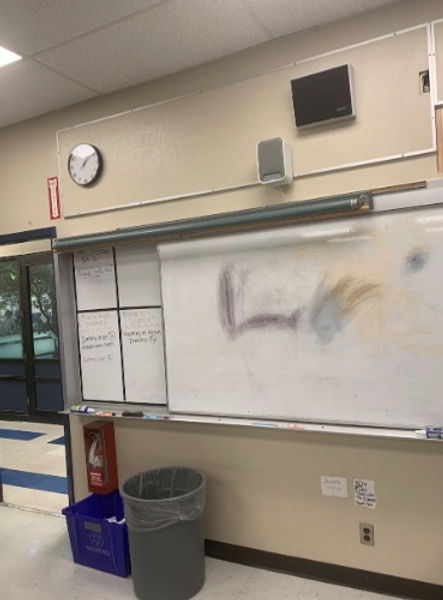
CLASSROOM PHOTOS X5



PROJECTS X5

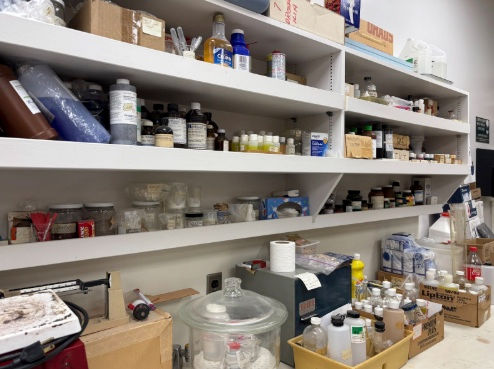
MATERIALS OF SUBJECT X5

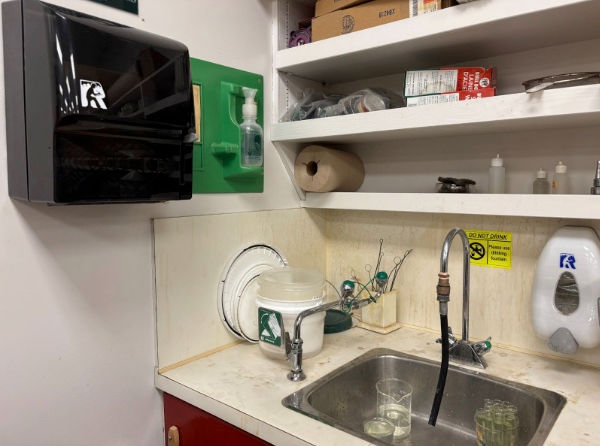
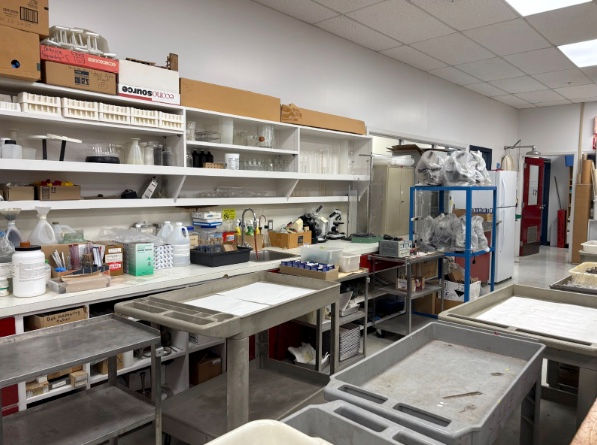
PREP ROOM X5